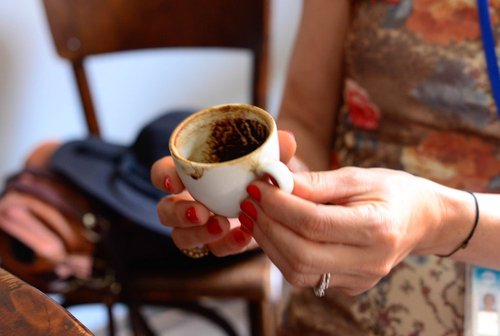
You may have heard the term crema in relation to coffee making, drinking, and taste. Crema is the creamy fine froth on top of freshly brewed coffee. Some people believe Arabic coffee doesn’t give you crema and only espresso
brewing does. We’re correcting that myth and discovering all about crema from Zou Zou Coffee’s founder and inventor, Joseph Atallah.
What is crema?
Crema sits on the surface of the coffee liquid and is often lighter in colour due to the release of tiny carbon dioxide bubbles and the emulsified or mixed oils from the coffee beans during the brewing process. Crema has a fine, creamy and foamy texture.
On its own, the crema can taste quite bitter. When sipped as part of the
overall shot, crema enhances the delicious experience by providing a fuller
flavour, wonderful aroma, and longer aftertaste.
Whether it’s an espresso or Arabic coffee, a nice thick crema layer can indicate that your coffee is made from freshly ground beans and brewed expertly. In espresso machines, hot pressurised water passes through the ground coffee to extract the flavour and crema. With Arabic coffee, the ground coffee is mixed and boiled with water together in hot sand or on a stovetop to unleash the flavour and crema.
Darker roasts, like the ones typically used for Arabic coffee, will have less
crema than medium roasts, but the coffee will have a more robust flavour.
Personal taste is important. Some people prefer coffee without crema. They
boil the coffee a number of times to destroy the crema.
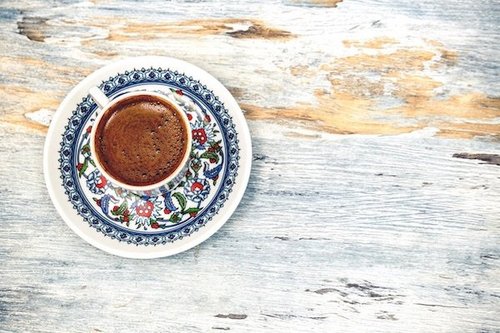
Photo by Yucar Studios on Unsplash.com
How to get a thick crema
Use fresh, good-quality beans and if you can, grind them just before brewing.
It’s important to know that the coffee bean blend, the type of roast, the age of
the beans and when they were roasted. The water used has a great effect on
the amount of crema and its colour. [Please see the article, The effect of
Lebanese water on Arabic coffee] zouzoucoffee.com
Arabic coffee requires a fine grind, whereas a fine grind in espresso machines doesn’t allow the pressurised water to pass through, leaving a weak crema, and a coarse or large grind allows too much water through and no crema.
What about the science?
Beans and Carbon Dioxide
There are two sources of carbon dioxide in the beans: the carbon dioxide
formed during roasting and the carbon dioxide formed during the synthesis of the coffee beans/cherries. When the trees make the coffee cherries/beans,
some carbon dioxide is trapped in the beans.
Roasting
When we place green coffee in the roaster and apply heat of around 200
degrees Celsius, many different chemical reactions occur. The organic
components of the beans start to decompose, forming new compounds.
Sugars within the coffee beans start to caramelise; smaller molecules burn, producing Carbon Dioxide, and carbohydrates combine with proteins – the
Maillard reaction – making new volatile compounds responsible for the aroma and non-volatile compounds responsible for the flavour of coffee.
Espresso crema
Adding pressurised hot water of around 92 degrees Celsius to the compacted
coffee in the espresso machine wets the coffee fragments, saturating the
coffee and filling the space between fragments. The hot water replaces the
carbon dioxide gas in the coffee, and carbon dioxide will bubble out of the
coffee. Other components of the coffee dissolve in the water, too, giving the
aroma we smell, the flavour we taste, and the proteins and oils that give us
the mouthfeel of the coffee liquid and create the crema. From a total amount
of 28 per cent of water-soluble components in the coffee, between 20 to 22
per cent dissolves in the espresso.

Photo by Nathan Dumlao on Unsplash.com
Arabic coffee crema
When making Arabic coffee, you start with cold water, add finely ground
coffee and sugar to taste, and then heat the mixture. The water slowly wets
the coffee and fills the spaces between coffee fragments.
As the mixture’s temperature rises, the carbon dioxide slowly escapes as
bubbles from the coffee. The water-soluble components of the coffee start to
dissolve in the water, giving us the aroma and flavour. The proteins, sugar and emulsified oils leave the coffee fragments, float to the top of the coffee, and capture the carbon dioxide and air bubbles to form the crema.
As some carbon dioxide dissolves in water, it forms bicarbonate that neutralises some of the acids in the coffee, creating more carbon dioxide. As
the temperature rises, more carbon dioxide escapes, and more of the coffee
components, about 26 per cent, dissolve in water. When the temperature
reaches 98 degrees Celsius, the crema starts to fold over. Remove the coffee
from the heat, and you will have maximum crema.
Crema’s composition
Crema comprises protein, sugars and emulsified oils created by the dispersion of carbon dioxide and air bubbles and helps retain coffee’s flavour. Tasting crema on its own, without sipping the coffee liquid, will be bitter and astringent due to the antioxidants in coffee.
The crema’s colour reveals the composition of the coffee blend. A reddish-
brown colour characterises a pure Arabica blend. Robusta is characterised by
its dark brown colour. The aroma profile, the chemical composition, and the
brew of the two coffee blends are also very different. In Arabica, there is twice the number of lipids, which gives the mouthfeel, as Robusta, but Robusta has twice as much caffeine.
Other factors
The water used influences the character and flavour of coffee. Depending on
the solutes in the water, it can also influence the volume of crema.
In Lebanon, we made coffee using water from a flowing stream. The volume
and density of the crema were greater due to carbonate in the water. The
stream flowed over limestone, and some of the carbonate dissolved into the
water, forming bicarbonate. Bicarbonate reacts with some acids in coffee to
produce more carbon dioxide as bubbles (carbonic acid produces the bubbles
in champagne or soft drinks).
Now you know how much goes on, while you make coffee, spare a thought for all of those coffee components breaking apart, forming, reforming, and
bubbling away, to make your cup of coffee. From its inception after spring rain, until the cherries turn red, the coffee seeds are complex actions and
reactions that create the green beans for you to roast.
If you don’t like a particular cup of coffee, please don’t blame the beans! They aim to please. Change the roast, the blend or the origin until you find coffee that satisfies you.
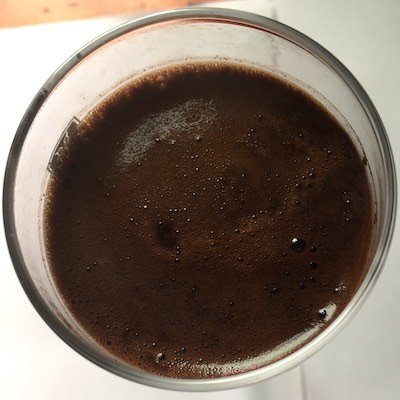
Photo by Zou Zou Coffee
The information in this article is from over 40 years of drinking and
experimenting with coffee and is complemented by the articles listed below.
Further reading:
Crema – Formation, Stabilization, and Sensation
Perfect Daily Grind
Paris Gourmet
Third Wave Coffee Roasters
Kunjani Coffee Roasters